Manifesto · 15 Jul 2026 · 9 min
Naturally. Not Virally.
The house was built on a single bet: that in an age when anything can be generated, the only thing left worth selling is knowing what is good.
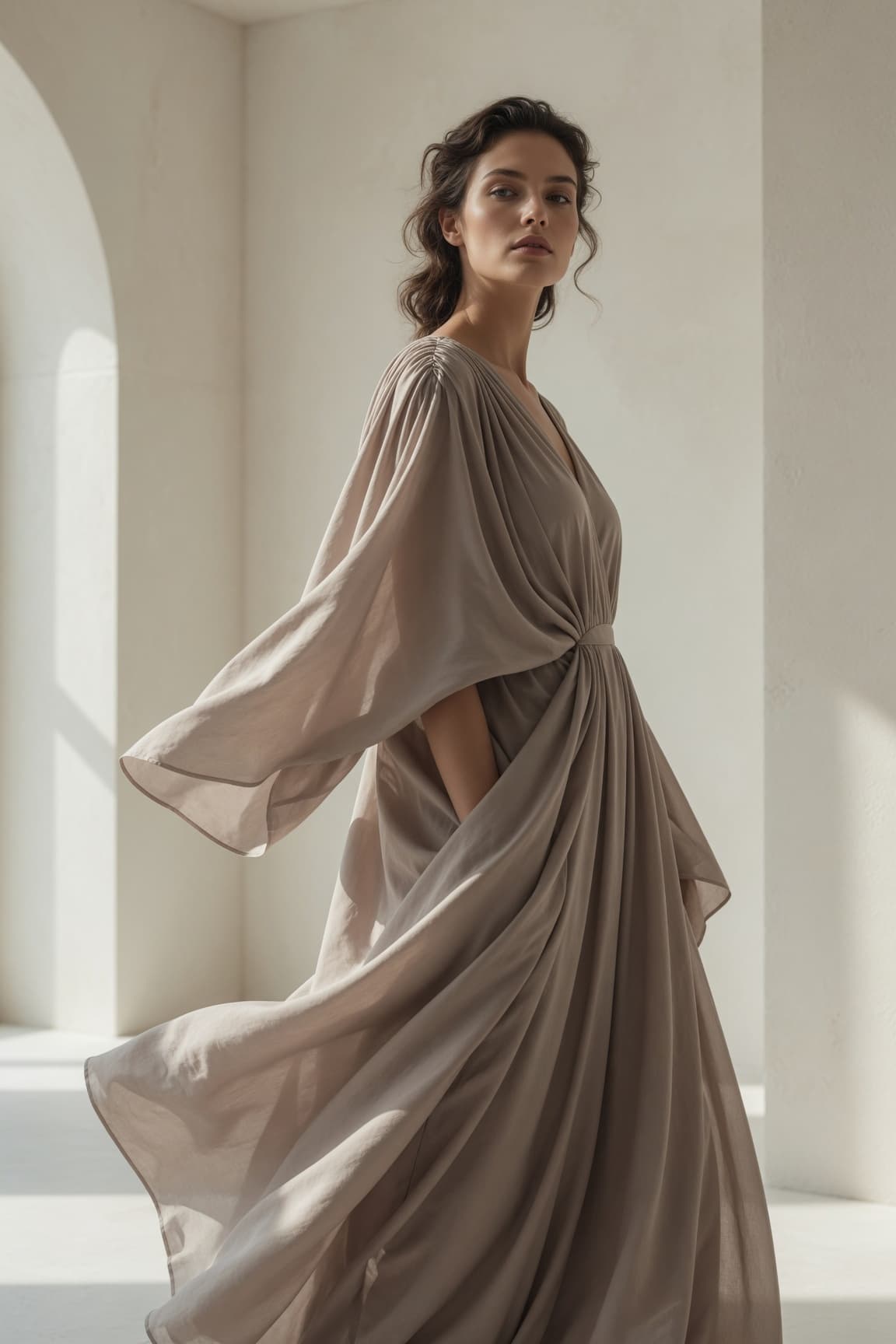
Anything can be made now. A season of silhouettes before lunch. A campaign by dinner. A thousand variations of a coat that will never be cut. The cost of producing an image has fallen to nothing, and the world has responded the way it always does to free things — by making an ocean of them. Most of it is mid. Not bad, exactly. Just averaged. Optimised toward the middle of everything that already worked.
This is the condition the house was built for. Not to add to the ocean, and not to stand on the shore complaining about it. To do the older, harder thing: decide what is good, and leave the rest out.
The scarce thing
For most of history, making was the bottleneck. Cloth was expensive. A photographer was expensive. A page in a magazine was the rarest thing of all. Taste rode on top of that scarcity — you noticed the eye precisely because so little got made. Now making is free and infinite, and the bottleneck has moved. The scarce thing is no longer production. It is judgment. Knowing which of the thousand coats is the one. Knowing when to stop.
Generation is free. Taste is not. That gap is the whole business.
This is not a nostalgic position, and it is not a fear of the tools. We use them, seriously, the way a patternmaker uses a toile — as a real step, not a novelty. What we refuse is the quiet assumption that infinite options are the same as good ones. Optionality is not taste. A feed is not an editor. The average of everything loud is not a point of view.
Naturally. Not virally.
The name is the argument, compressed. Naturally is the standard: natural light, natural pacing, materials that behave, interfaces that do not shout, work that reads as edited rather than generated. Not virally is the refusal: no cheap heat, no design brief secretly written by the distribution strategy, nothing that only works loud and dies the moment it is quiet.
Virality optimises for recognition in under a second. It rewards the logo, the shock, the thing you understand before you have really looked. There is a place for that. It is not this place. We are interested in the work that needs a second look and rewards a third — the coat that reads as plain across a room and resolves into precision up close, the sentence that still holds after the feed has scrolled past it.
Two halves, one standard
The house has two rooms. The Journal is where the eye is published — essays on craft, on the niches actually worth caring about, on what AI is doing to fashion when you take it seriously instead of using it as a filter. The Studio is where that same eye becomes a tool: generative craft held to the magazine's bar, or it does not open.
The order matters. We earn the standard in public first, in writing, where it can be read and argued with. The tool comes after, and it carries that standard with it. A house with no proven eye selling a machine that makes images is just another faucet on the ocean. We would rather be the reason you trust the water.
Everything here is arranged to make that legible. The images are architecture and light before they are product, because atmosphere is the argument. The pages are mostly space, because space is the luxury and the edit made visible. If a thing only works at volume, it is not for us.
This is slower than the alternative, and that is the point. Slow is not stagnant; slow is how you stay expensive without becoming a costume. The Journal is open. The Studio is limited by design. The standard is not negotiable. Naturally. Not virally.